One Landscape, Many Outcomes
How SARA sees integrated ecosystems through a triple-bottom-line lens
Why SARA starts with the whole system
SARA is a farmer-founded, producer-centered nonprofit. We work where real decisions get made: on working lands, with real weather, real budgets, and real risk.
That’s why we don’t treat conservation like a checklist—soil over here, water over there, wildlife somewhere else. We see one connected landscape. When you change one part of that system, the effects ripple.
And we use a simple rule to keep our work grounded: if an idea can’t support people, the planet, and producer prosperity at the same time, it won’t last.
Integrated ecosystems: everything is connected
An ecosystem isn’t “nature over there.” It’s the full set of relationships between soil, water, plants, animals, and the choices people make. In West Texas, that connection is easy to see: the way moisture moves through the soil, how wind and heat stress plants, how cover affects erosion, and how all of it shows up in the bottom line.
When we look at a practice or project, we ask: what does it change upstream and downstream?
Soil: structure, organic matter, biology, compaction
Water: infiltration, storage, runoff, quality
Plants: root depth, ground cover, diversity, seasonal timing
Animals: livestock performance, pollinators, wildlife habitat
Weather & climate: rainfall patterns, heat, wind, drought intensity
Management: grazing/cropping choices, infrastructure, inputs, timing
Economics: costs, cash flow, market access, volatility, long-term land value
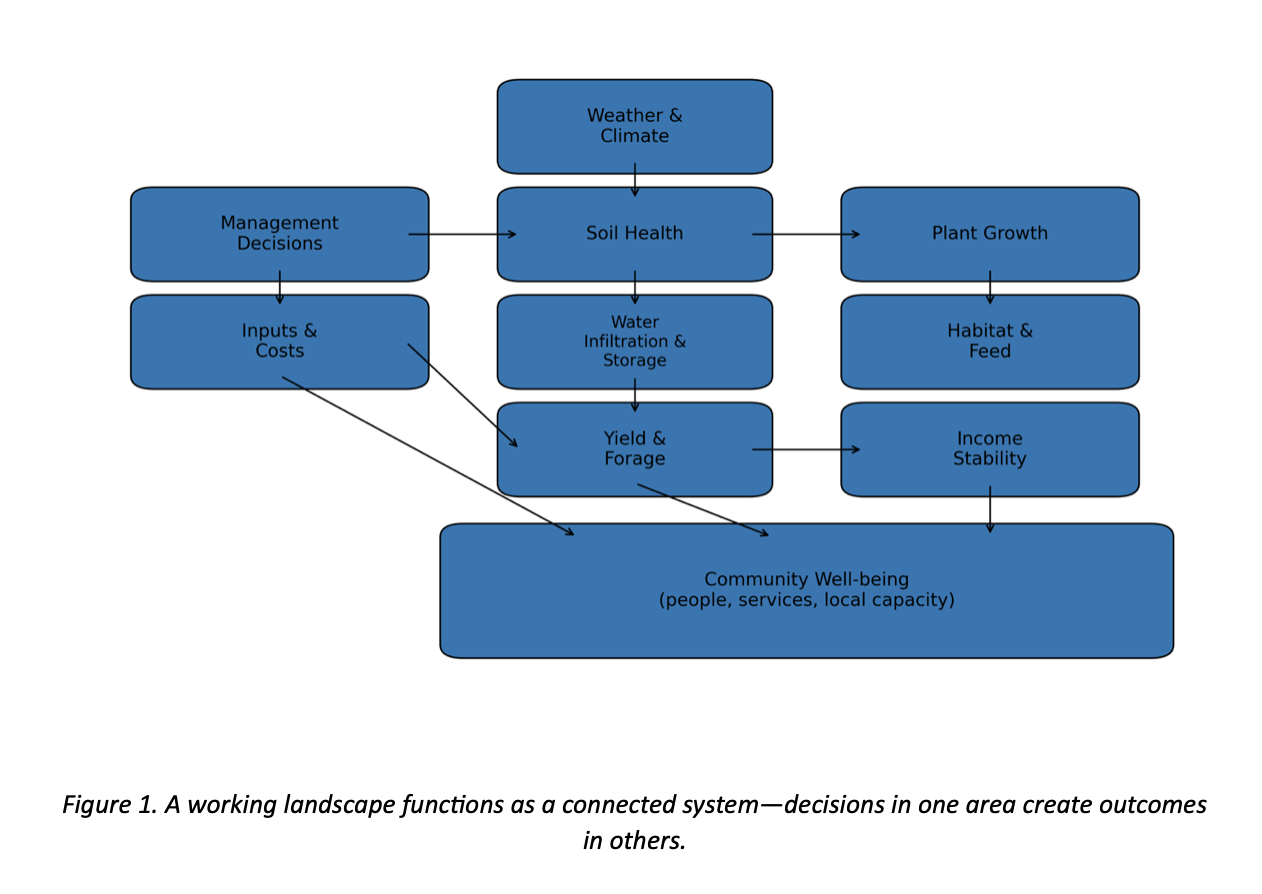
Feedback loops: building resilience (or draining it)
Landscapes don’t respond once and stop—they respond over time. That’s why SARA pays close attention to feedback loops. Some loops work in your favor—when soil is protected with residue and living cover, runoff slows down, water has time to soak in, and the next growth cycle builds even more cover. Other loops work against you: when ground is bare and the surface seals or crusts, rainfall sheds off the field, infiltration drops, evaporation rises, and each storm delivers less benefit than the last.
SARA is committed to strengthening the “virtuous cycles” and interrupting the “vicious cycles” with practical, producer-tested steps. That’s one reason we support efforts like NASA DEVELOP, which has helped identify cover crop presence on the Southern High Plains using remote sensing. With region-wide data, we can evaluate where and when cover crops support moisture retention (and where they don’t), under real-world production scenarios. This prevents assuming a one-size-fits-all outcome—and instead helps us focus on what works, for the right fields, at the right time.
Triple-bottom-line economics: People, Planet, Profit
SARA uses the triple bottom line because single-metric decisions break down fast on working lands. A practice that looks good on paper but can’t be adopted locally won’t stick. A project that helps today but weakens the land’s long-term function is a slow loss.
Here’s how we define the three “bottom lines” in plain terms:
People:
Does it help producers and rural communities stay strong?
Does it build local capacity—skills, leadership, partnerships, and trust?
Does it reduce stress and uncertainty by improving stability?
Planet:
Does it protect or regenerate soil, water, and habitat?
Does it reduce erosion, runoff, and long-term depletion?
Does it improve resilience to drought and extreme weather?
Profit:
Does it pencil out now and over time?
Does it reduce volatility and risk for producers?
Does it support productivity, markets, and land value?
We don’t use this lens to slow things down. We use it to make sure the work is realistic—and repeatable—across the region.
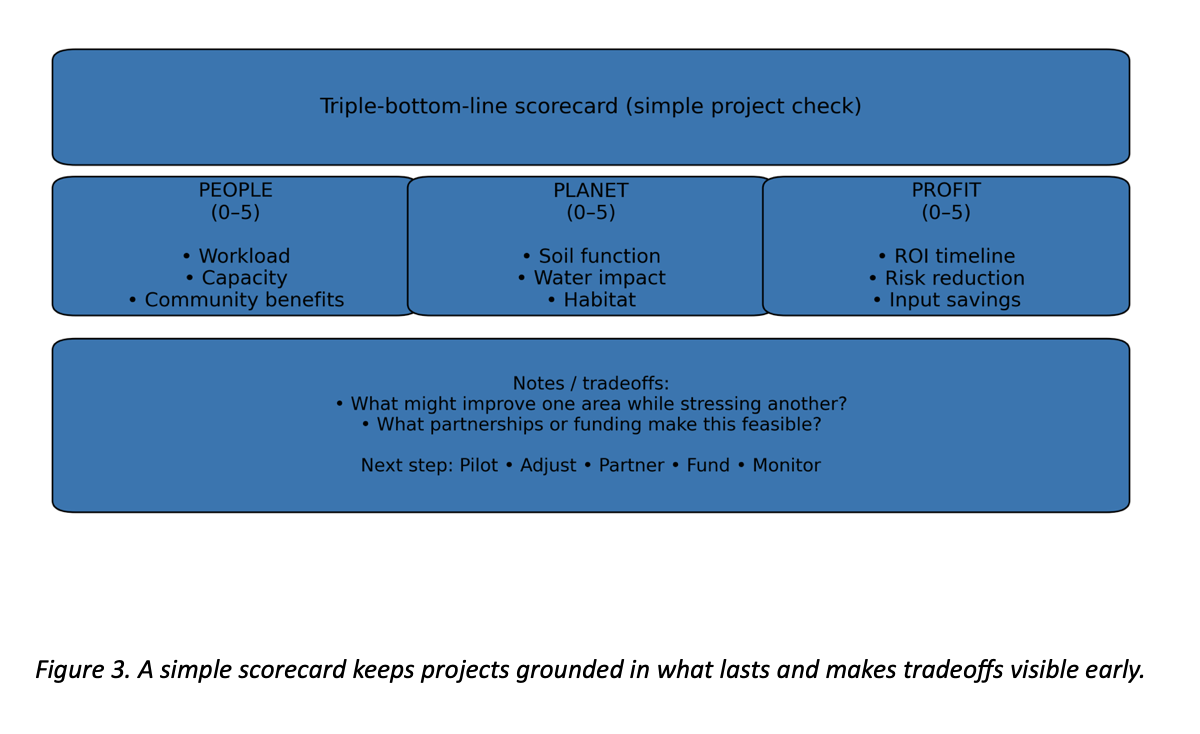
How SARA puts these ideas into action
We use the ecosystem lens to understand how change moves through the landscape. We use the triple-bottom-line lens to decide whether the change is worth piloting, funding, and scaling.
Most of our work is voluntary and incentive-based. That approach respects producers’ realities and also makes projects more durable—because adoption is earned, not forced.
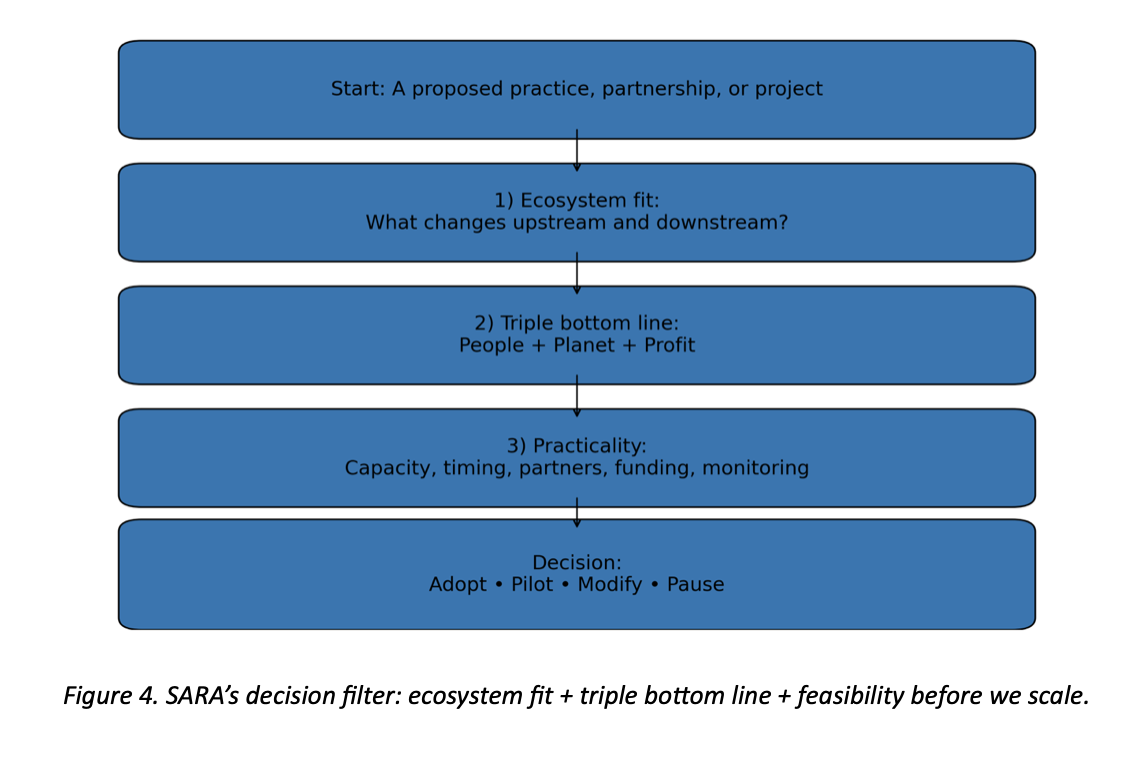
What this protects
When ecosystems are treated as integrated, the best outcomes stack: soils hold more water, plants grow more consistently, operations become more resilient, and rural communities stay strong. That’s the kind of stewardship SARA is committed to advancing across the Texas Panhandle—through partnerships, applied research, and practical tools producers can trust.
Suggested Reading & Sources
These resources provide background on the triple bottom line and systems thinking (including the origin of the term “triple bottom line,” coined by John Elkington in 1994).
Investopedia — “Triple Bottom Line: What It Is and How to Measure”
John Elkington — “Enter the Triple Bottom Line” (chapter PDF):
University of Michigan — Resilience Earth: “Systems thinking and Feedback Loops”
Want to collaborate with SARA? Learn more at www.sara-conservation.com